
A pixel-perfect developer portfolio, blog, and component registry built with Next.js 16 (App Router), Tailwind CSS v4, and Fumadocs.
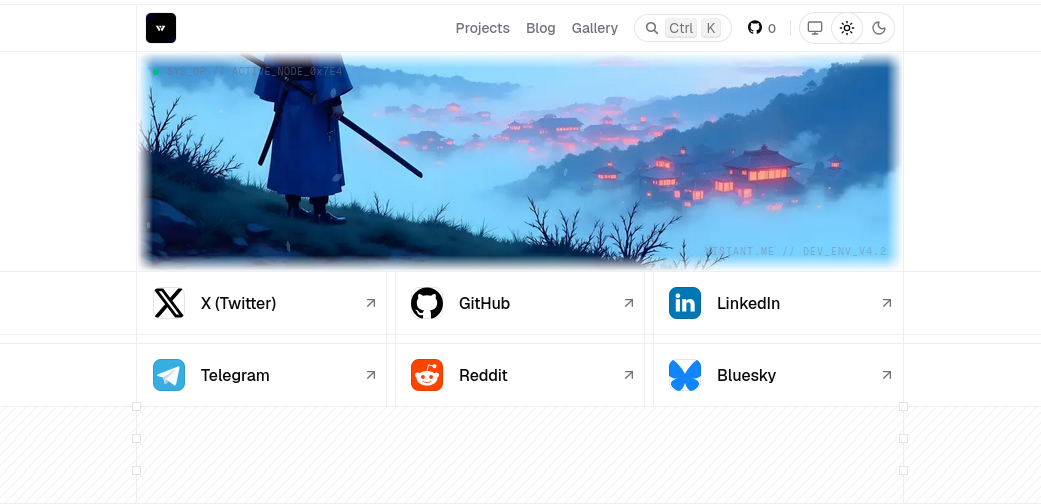
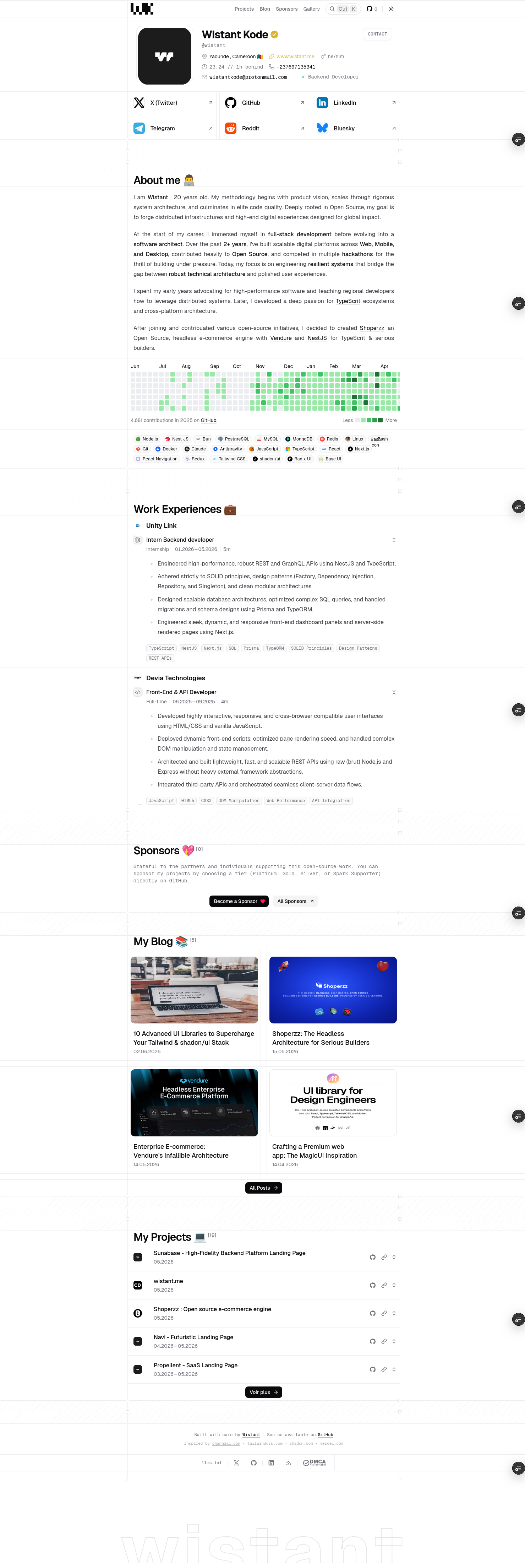
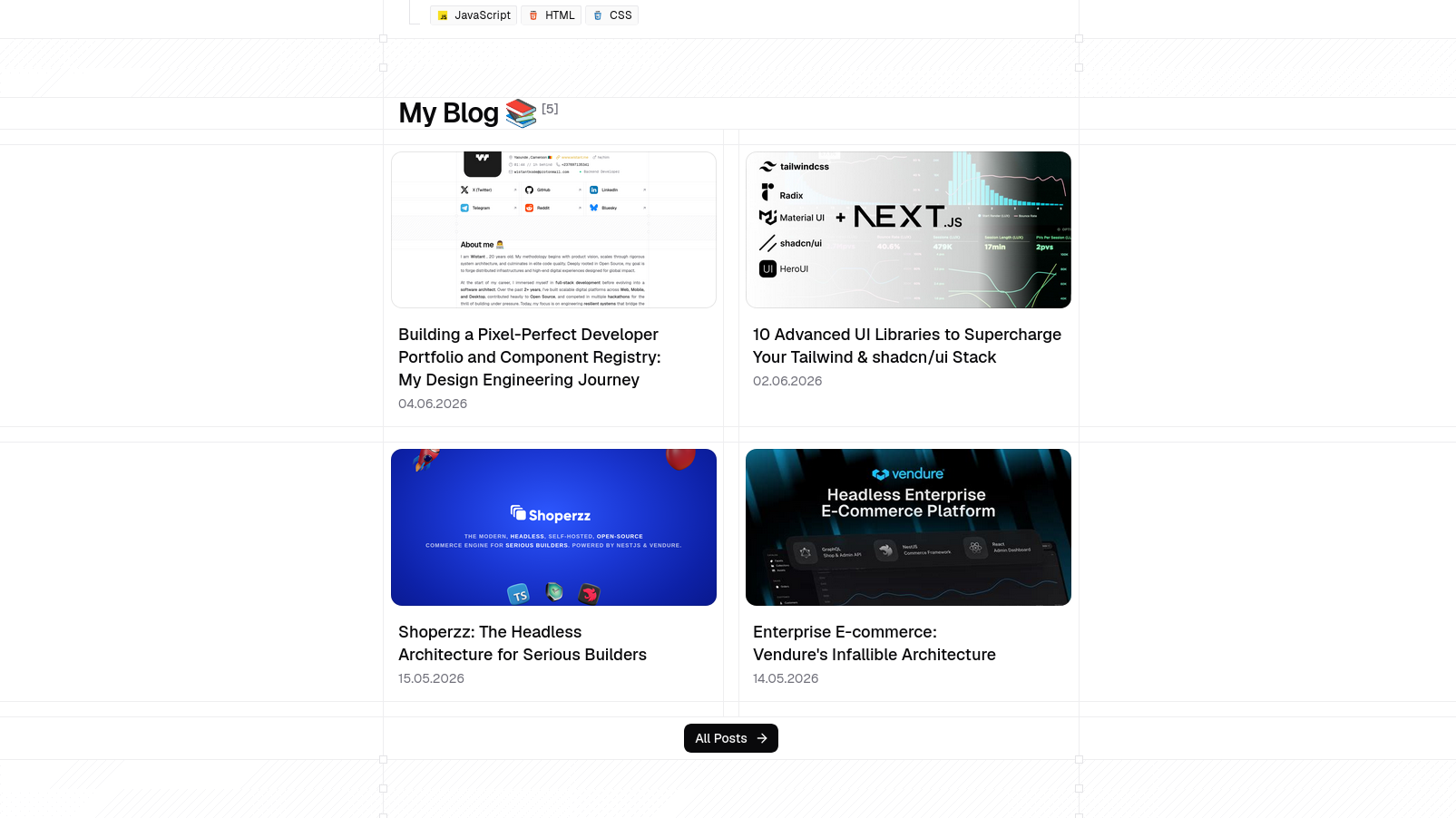
Welcome to wistant.me, the official digital home, blog, and custom component registry of Wistant Kode.
This project is not just a personal landing page; it is a labor of design engineering passion. It is a highly optimized, fully responsive playground that merges dashboard-inspired grid symmetry with smooth, physical animations and an embedded code distribution engine.
Whoever reads this should know: every line, every border, and every spring animation curve was crafted with a relentless obsession for UI excellence.
🎨 The Genesis: A Passion for Pure UI/UX and Grid Symmetry
Most personal sites use generic templates or basic component libraries. For wistant.me, I wanted to build something that feels alive—a space inspired by terminal panels, developer dashboards, and pixel-aligned grids.
Inspired by design pioneers like Chanh Dai, I designed a custom grid layout from scratch. Instead of using generic CSS borders, the grid dividers (e.g. .screen-line-top and .screen-line-bottom) are engineered using repeating linear gradients to render custom pixel dashes. This creates a dashboard layout that locks perfectly on all viewports, providing a consistent structural frame.
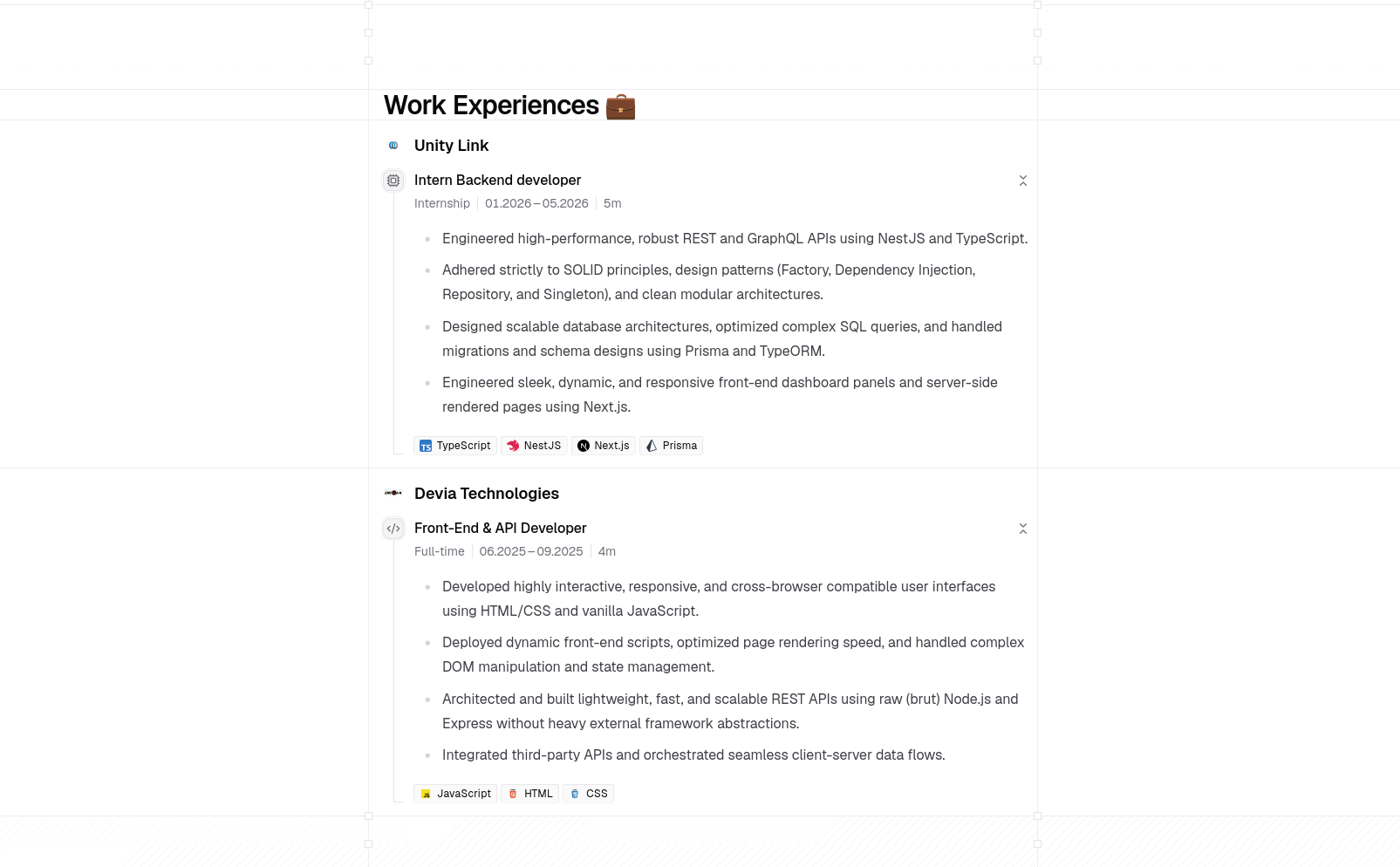
⚡ The Elements: Crafting the Perfect Micro-Interactions
A premium user interface is defined by its details. Every hover state and transaction on this site has been optimized with spring-physics calculations rather than generic CSS durations:
1. The Interactive Profile Bio & About Panel
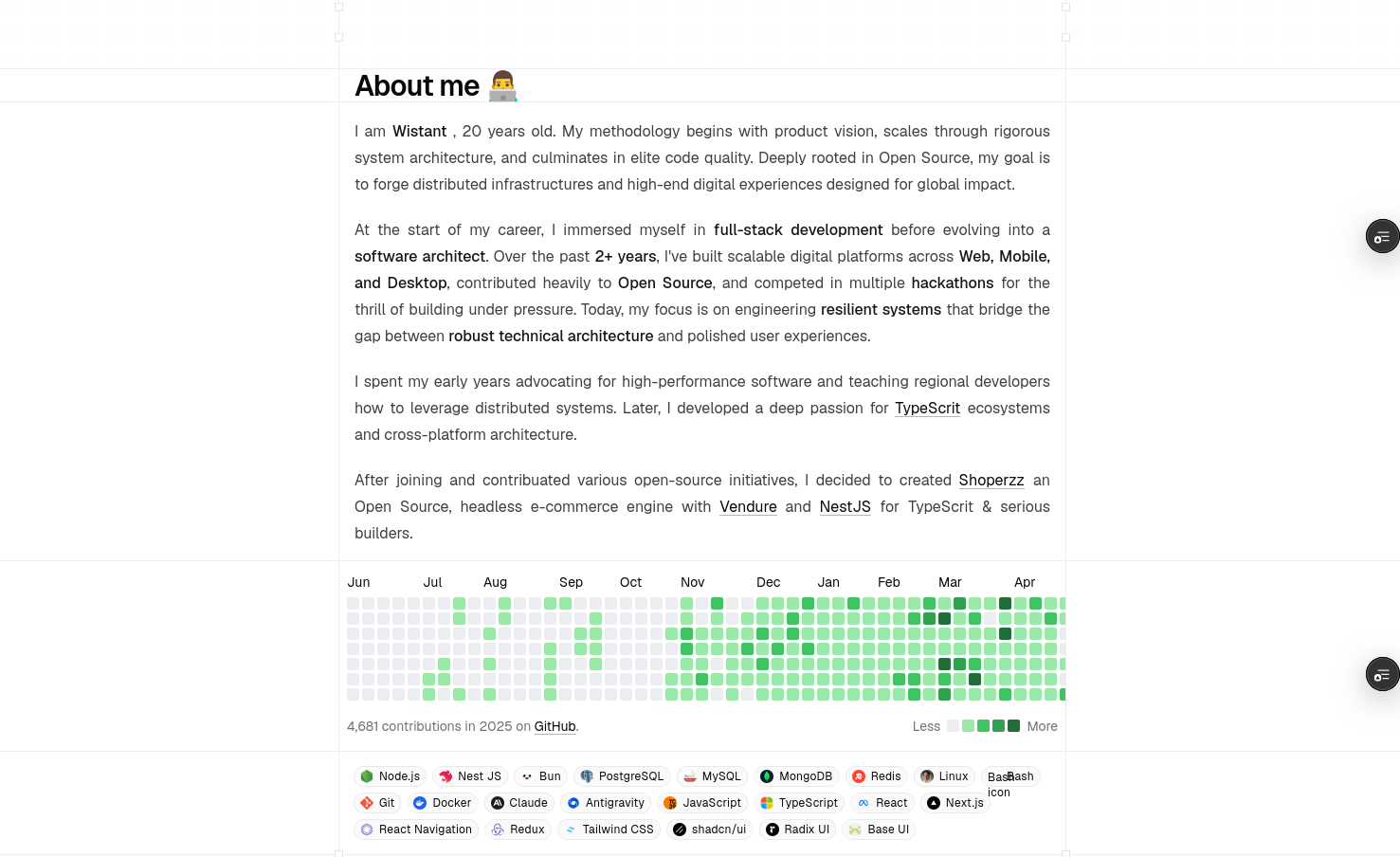
The top section features a gorgeous profile card. It incorporates an interactive AvatarLights profile image with custom hover-lighting effects, verified badges, real-time timezone calculators, name pronunciation audio, and animated text flips that slide effortlessly.
2. The Active Console Footer Status Bar
To match the header's layout, the footer utilizes a signature h-12 console status bar enclosed in pixel lines. It acts as an active terminal widget:
- SYS: ACTIVE — A glowing, pulsing green LED indicating system health.
- Social Links — Minimalist social icons with custom background hover highlights (
hover:scale-108 hover:bg-muted/40). - Command Shortcuts — A live indicator reminding users that pressing
⌘Kopens the search console.
📦 The Component Distribution Engine
Beyond writing articles, the site is designed to distribute React primitives. I built an AST-based compilation pipeline that acts as a custom component registry:
- Component Source: Advanced animated components, custom hooks, and blocks are written inside
src/registry/. - AST Parsing Script: A compiler script (
pnpm registry:build) parses the React files, inspects imports, and resolves internal package dependencies. - Manifest Generation: The compiler outputs JSON manifests to
/public/r/[name].json, enabling direct imports via the shadcn CLI or one-click copy installations.
🛠️ The Atomic Commit Discipline & Pipeline Orchestration
For me, clean code is just as important as clean UI. The repository is governed by the Atomic Commit Protocol. Every commit represents a single, isolated logical intention (e.g., feat, fix, ui, refactor).
To enforce this discipline, I built a custom pipeline wrapper under /tooling:
tooling/push.sh— Run pre-push checks (Prettier format, ESLint, TypeScript check, changesets) to guarantee zero regressions.tooling/sync.sh— Ensures rebase-based upstream synchronizations.tooling/make-release-description.sh— Automatically generates release notes from semantic commits.

This site represents my journey as a Design Engineer—where strict front-end performance metrics meet aesthetic passion.